• Skip to primary navigation
  • Skip to main content
  • Skip to primary sidebar

Flea Bites

Flea Bites on Humans and Pets

  • The Flea
  • Flea and Pets
  • Flea Bites Pictures
  • FAQ
  • Get Rid of Fleas
  • Treatment

Archives for October 2023

What Does a Flea Look Like?

October 4, 2023 By Lacie Zender

Introduction

What Does a Flea Look Like? Every homeowner, pet owner, or anyone who has ever experienced the insistent itch of a flea bite understands the importance of recognizing these tiny pests on sight. Fleas, though minute, pose significant concerns not just for our furry companions, but also for us. By accurately identifying them, we stand a better chance of implementing effective extermination strategies. In this comprehensive guide, we’ll dive deep into the distinctive appearance and characteristics of fleas. Armed with this knowledge, you’ll be better prepared to address flea infestations head-on, ensuring a comfortable living environment for both you and your pets. According to the Center for Disease Control and Prevention (CDC), fleas are known vectors for several diseases, making their identification and control all the more crucial. Join us on this journey as we reveal the world of fleas from a perspective you might never have considered before.

The Basic Anatomy of a Flea

As you delve into the intricate world of these diminutive creatures, it becomes evident that fleas are marvels of evolution, designed specifically for their parasitic lifestyle. Every aspect of their anatomy, from their robust exoskeleton to their powerful legs, serves a unique purpose, ensuring their survival and proliferation.

Body Structure  
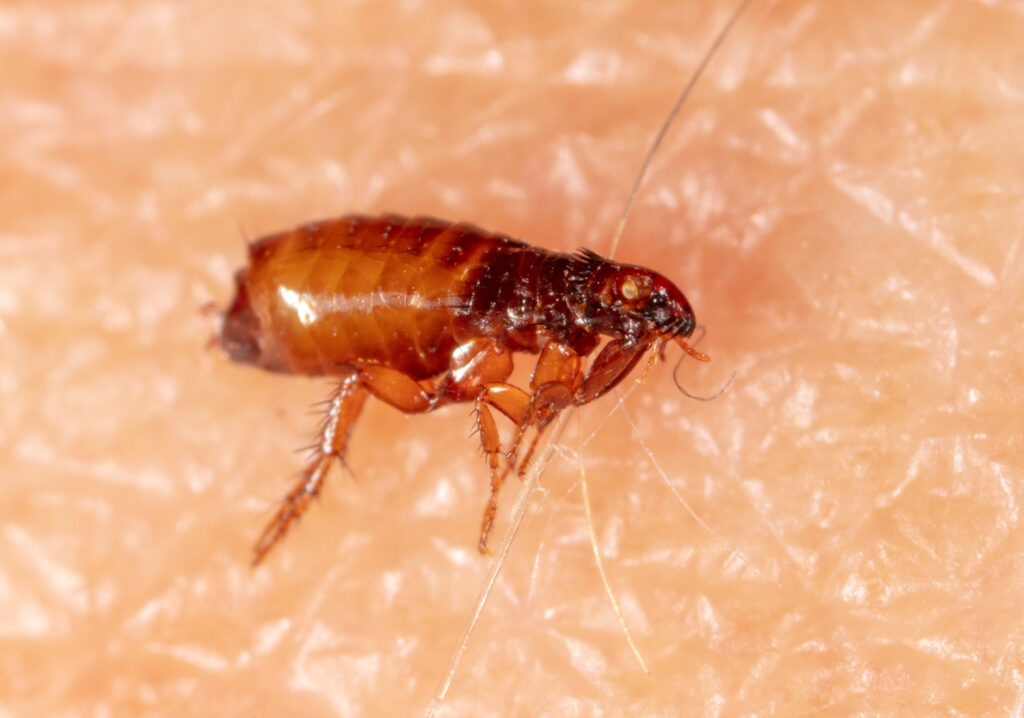
Fleas possess a tough and durable exoskeleton, which grants them an impressive resilience against common extermination methods. This external skeleton not only provides protection but also aids in retaining moisture, vital for their survival. Their body is divided into three distinct regions: the head, thorax, and abdomen. Each segment has evolved with specific functions in mind, from hosting sensory organs to aiding in locomotion and reproduction.

Legs: Built for Jumping  

Arguably the most recognizable feature of a flea is its hind legs. Crafted for jumping, these legs can propel the flea over distances many times its body length. This remarkable ability allows them to navigate through fur, hair, and across hosts with unparalleled ease, making them elusive targets. The muscle structure and joint mechanism of these legs are so advanced that they’ve been studied by scientists and engineers for bio-inspired designs.

Mouthparts: Tools for Feeding  

When it comes to feeding, fleas are equipped with specialized mouthparts designed for piercing the skin and sucking blood. This adaptation ensures they get their required nutrients directly from their hosts. They secrete saliva containing anticoagulants, ensuring the blood doesn’t clot while they feed. This very process, as detailed by Entomology Today, is what can cause the itchy and often inflammatory reaction in humans and animals post a flea bite.

Color and Size: Distinctive Flea Features

One might think that spotting a flea would be a straightforward task, but these pests have evolved to blend seamlessly into their environment, making them masters of disguise. Recognizing the typical coloration and size of fleas is pivotal in ensuring that we’re dealing with the right culprit and not misidentifying another insect as our foe.

Typical Coloration Patterns  

Fleas are generally characterized by shades ranging from dark brown to reddish-brown. This earthy coloration provides them with a natural camouflage. Especially when they’re nestled deep within the fur or hair of their hosts. Their tint is not just a result of evolution for disguise. But it’s also influenced by their diet, which primarily consists of blood from their hosts.

Size Comparison  

In terms of size, adult fleas are tiny, usually measuring between 1/16 to 1/8 inch long. To visualize this, consider that an adult flea is roughly the size of a pinhead or a speck of pepper. However, don’t be deceived by their small stature. Despite their diminutive size, they possess the power to cause significant discomfort to their hosts and can quickly infest an environment if left unchecked. As PestWorld outlines, understanding the typical size of a flea is paramount in distinguishing them from other pests and ensuring the right extermination approach.

Flea Lifecycle Stages: From Egg to Adult
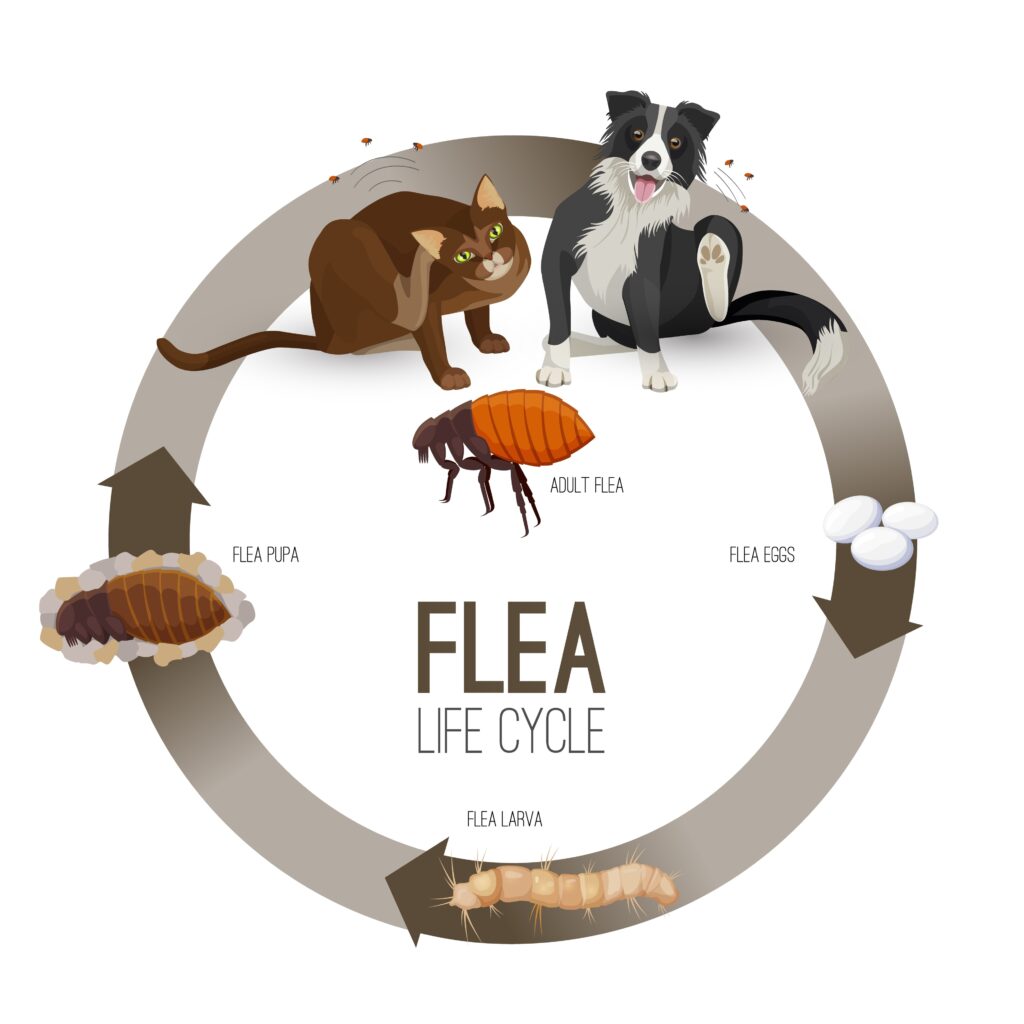
To effectively combat and control a flea infestation, one must first understand their entire lifecycle. Like many pests, fleas don’t merely appear in their recognizable adult form; they go through a series of developmental stages. Each stage presents its own challenges and requires unique strategies to manage. By acquainting ourselves with this lifecycle, we can target fleas at their most vulnerable phases, ensuring a more comprehensive eradication. What Does a Flea Look Like?

Eggs:  

Flea eggs are the genesis of the infestation cycle. These tiny, white, and pearl-like orbs are often sprinkled by adult fleas into the environment, typically in places where the host rests. Due to their minuscule size and color, they can easily be mistaken for dandruff or grains of sand. However, each egg harbors the potential to develop into a voracious adult flea.

Larvae:  

Emerging from the eggs are the flea larvae. Tiny, worm-like creatures that shun light and burrow deep into carpets, cracks, and soils. They feed on organic debris, but most importantly, on the feces of adult fleas which are rich in undigested blood. This phase of their lifecycle is when they’re most vulnerable, as environmental disruptions can easily disturb their development.

Pupae:  

The next stage is the pupal phase, wherein the larvae encase themselves in a silk-like cocoon. This cocoon offers protection, allowing the developing flea to undergo metamorphosis. The pupal stage can vary in length, with some fleas emerging within a week. While others can remain dormant for months, awaiting the right conditions or stimuli, like the vibration from footsteps or warmth.

Adult Fleas:  

Out of the cocoon emerges the fully formed adult flea, ready to find a host and feed. As noted by The Spruce Pets, the lifespan of an adult flea, while short. Typically ranging from two weeks to several months—is marked by rapid reproduction, laying as many as 50 eggs a day. It’s this prolific nature that underscores the importance of early identification and intervention.

Comparing Fleas to Other Common Insects

What Does a Flea Look Like? Given the plethora of small, biting insects that can invade our homes and plague our pets, it’s easy to mistakenly identify one insect for another. To ensure the effectiveness of treatment strategies and prevent undue distress, it’s essential to differentiate fleas from other similar pests. By drawing clear distinctions between these insects, we can tailor our extermination methods accordingly, ensuring optimal results.

Fleas vs. Bed Bugs:  

At a cursory glance, fleas and bed bugs might appear somewhat similar. Both are small, wingless, and feed on blood. However, there are key differences. Fleas, as we’ve discussed, are typically dark brown and possess a more elongated body, while bed bugs are flatter and more oval-shaped. Furthermore, while fleas are notorious jumpers, bed bugs lack this ability and tend to crawl to their destinations. Their bites also differ: flea bites often manifest as small, clustered itchy spots, while bed bug bites tend to be in a linear or zigzag pattern.

Fleas vs. Ticks:  

Ticks, like fleas, are bloodsuckers, but they belong to the arachnid family, meaning they are more closely related to spiders. They have a more rounded body structure and lack the powerful hind legs that characterize fleas. Additionally, while fleas may bite and move, ticks latch onto their host, embedding their mouthparts into the skin, sometimes for days. According to the American Kennel Club (AKC), ticks can transmit a host of diseases, further emphasizing the need to differentiate between them and fleas.

Fleas vs. Lice:  

Lice are another group of pests that thrive on blood, particularly found in the hair and scalps of humans. They are larger than fleas, have a flatter body, and their six legs are of equal length, unlike the distinctively long hind legs of fleas. Lice infestations are also more localized, often restricted to hair, whereas fleas can be found all over the body and in the environment.

Common Misconceptions About Flea Appearance

In our journey to understand and combat fleas, it’s not just the facts we need to arm ourselves with, but also the discernment to sift through prevailing myths and misconceptions. Over time, several myths about flea appearance and behavior have taken root, which can lead to ineffective treatments or misguided prevention strategies. By debunking these myths, we position ourselves better to tackle these persistent pests head-on.

Debunking Myths:  

One widely held misconception is that fleas are only a problem in homes with pets. While pets can indeed be primary hosts, fleas can infest any space, hitching rides on clothing or luggage. Another myth is the belief that fleas are too tiny to be seen with the naked eye. In reality, while they are small, adult fleas are entirely visible, especially when moving against a light background.

Clearing up Common Points of Confusion: 

Often, fleas are mistaken for other pests like mites or even simple specks of dirt. Their quick movements and ability to hide deep within fabrics can further this confusion. Additionally, some believe that cold climates are flea-free. However, while fleas thrive in warmer temperatures, they can survive in colder climates, especially indoors. The Environmental Protection Agency (EPA) emphasizes that understanding the true nature and behavior of fleas is instrumental in devising effective pest control strategies. What Does a Flea Look Like?

Why Identifying Fleas Correctly Matters

In the quest to maintain a flea-free environment, the ability to correctly identify these pests is not merely a matter of academic interest—it is a practical necessity. Misidentification can lead to the application of inappropriate treatments, resulting in wasted time, resources, and continued discomfort. Moreover, knowing what we’re up against can mean the difference between temporary relief and a comprehensive, long-term solution. What Does a Flea Look Like?

The Risk of Misidentification:  

When we mistake another insect for a flea or vice versa, we might end up applying treatments that are ineffective against the actual culprit. For instance, while certain sprays might work wonders against fleas, they might be futile against other pests like bed bugs. Misidentification can thus prolong infestation cycles, escalate costs, and even expose inhabitants to unnecessary chemicals.

The Benefits of Accurate Knowledge:  

On the flip side, accurately identifying fleas allows for targeted extermination methods. It ensures that the right strategies—from choosing the correct repellents to understanding the flea’s life cycle and behavior—are applied. As highlighted by PetMD, tailored treatments based on correct identification can break the lifecycle of fleas, preventing future infestations and offering lasting peace of mind.

Conclusion: What Does a Flea Look Like?

As we conclude our in-depth exploration into the world of fleas, it becomes evident that the battle against these minute pests extends beyond mere extermination—it’s about equipping ourselves with knowledge and remaining ever vigilant. By mastering the art of identifying fleas, understanding their lifecycle, and differentiating them from other pests, we position ourselves as empowered, informed individuals ready to tackle any flea challenge head-on. 

The Importance of Continuous Learning:  

The realm of entomology, especially concerning fleas, is vast and ever-evolving. New research, findings, and methods of control continually emerge. Staying updated, perhaps by subscribing to journals like the Journal of Medical Entomology, ensures we’re always a step ahead of these pesky invaders. What Does a Flea Look Like?

Encouragement to Stay Vigilant and Proactive:  

The fight against fleas is ongoing. Regular checks, especially for pet owners, proactive cleaning, and a keen eye can prevent minor infestations from ballooning into larger issues. Remember, knowledge is power. With the insights gained from this guide and a proactive stance, we can aspire to a comfortable, flea-free environment.
  • Eliminating Fleas Year-Round
  • Identifying Fleas on Dogs
  • Identifying Fatal Flea Symptoms in Dogs
  • Solutions for Dogs with Fleas
  • Where Do Dog Fleas Come From?

Filed Under: Uncategorized Tagged With: What Does a Flea Look Like?

Does Dawn Dish Soap Kill Fleas? An Expert Unveils the Truth

October 4, 2023 By Lacie Zender

Introduction – Does Dawn Dish Soap Kill Fleas?

Every pet owner, at some point, has faced the age-old adversary: fleas. These tiny invaders are more than just a nuisance; they pose health threats to our furry friends and can quickly become an infestation nightmare. Over the years, a myriad of home remedies have been suggested to tackle this persistent pest, with Dawn dish soap often taking center stage. But does it truly work? Does Dawn Dish Soap Kill Fleas? Can a simple kitchen staple be the silver bullet we’ve all been searching for? As we delve into this topic, we’ll unravel the facts, supported by science, to help you make an informed decision. According to Entomology Today, understanding the biology and behavior of fleas is crucial to combating them effectively. By leveraging this knowledge, we’ll assess whether Dawn dish soap can indeed be an ally in our fight against these unwelcome guests.

Why Dawn Dish Soap?

In our quest for a flea-free home, it’s not uncommon to reach for solutions that are readily at hand. Dawn dish soap, a ubiquitous presence in most American kitchens, has often been heralded as a home remedy for these tiny pests. But why has this particular soap caught the imagination of homeowners across the country?

Historical Context: Why This Remedy is Popular

The genesis of Dawn dish soap’s reputation dates back to its documented use in wildlife conservation efforts. When animals became victims of oil spills, rescue workers often turned to Dawn to cleanse and rehabilitate the affected creatures. Its efficacy in removing oil while being gentle on skin and feathers made headlines. Naturally, homeowners began to speculate: if it could strip oil, couldn’t it strip the protective layers off fleas, rendering them vulnerable?

The Ingredients in Dawn That Make it Different from Other Dish Soaps

At its core, Dawn dish soap is a surfactant—a compound that breaks the surface tension of a liquid. Its specific formulation not only tackles grease but also possesses certain properties that can compromise the exoskeletons of insects like fleas. While many dish soaps contain surfactants, Dawn’s unique combination of ingredients, as detailed by Procter & Gamble, its parent company, ensures a delicate balance of cleaning power without being overly harsh on living tissues. This delicate balance may hold the key to its purported effectiveness against fleas.

The Science Behind Soap and Fleas – Does Dawn Dish Soap Kill Fleas?

As we dive deeper into the world of fleas, it’s essential to ground our understanding in science. After all, if we’re to combat these nuisances effectively, we need more than just anecdotal evidence. We need to know how and why certain solutions work, or if they work at all. Dish soap, especially brands like Dawn, is not just a tool to clean dirty dishes. When applied to the realm of flea control, it operates on some fascinating scientific principles.

How Soaps Work on a Molecular Level

Soaps, at their very essence, are molecules with a dual nature. One end of the soap molecule is hydrophilic (water-loving) while the other end is hydrophobic (water-repellent). This dual characteristic allows soaps to trap and lift away dirt and oils. When it comes to fleas, this property plays a crucial role. The soap molecules can effectively surround and trap fleas, making it hard for them to escape when submerged.

The Physical Effects of Soap on Flea Exoskeleton and Respiratory System

Fleas, like many insects, breathe through tiny tubes called tracheae. These tubes are water-repellent, ensuring that the insect doesn’t drown easily. However, when introduced to soap, these tracheae get blocked by the soap molecules. Moreover, a flea’s exoskeleton, crucial for its survival, is compromised by the surfactant properties of the soap. According to a study published in the Journal of Medical Entomology, soap can interfere with the waxy layer of the flea’s exoskeleton, leading to dehydration and ultimately the flea’s demise. Does Dawn Dish Soap Kill Fleas?

Benefits of Using Dawn Dish Soap for Fleas

As homeowners and pet lovers, we’re continually seeking solutions that are not only effective but also safe and economical. In this pursuit, Dawn dish soap emerges as an option that offers several advantages over some commercial flea treatments. Let’s break down the potential benefits, backed by scientific insights and the collective experiences of countless pet owners. Does Dawn Dish Soap Kill Fleas?

Accessibility and Cost-effectiveness

One of the standout attributes of Dawn dish soap as a flea remedy is its widespread availability. Most households already have a bottle in their kitchens, making it an immediate go-to option. Compared to specialized flea treatments, which can sometimes come with a hefty price tag, Dawn offers a cost-effective alternative. Its multi-purpose nature means you’re not buying a product solely for flea treatment, ensuring utility even if your flea problem is seasonal or occasional.

Safety Concerns Compared to Commercial Flea Treatments

Commercial flea treatments, while effective, sometimes contain chemicals that can be harsh for pets, especially when used frequently. These chemicals, while targeting fleas, can occasionally lead to side effects in pets, ranging from skin irritations to more severe allergic reactions. Dawn dish soap, on the other hand, has a legacy of being used on sensitive creatures, like birds affected by oil spills, as highlighted by International Bird Rescue. Its mild formulation, when used appropriately, ensures that pets aren’t exposed to strong chemicals, making it a gentler alternative for occasional flea outbreaks.

Environmental Impact – Does Dawn Dish Soap Kill Fleas?

Environmentally conscious homeowners often gravitate towards solutions that are eco-friendly. Dawn dish soap, being biodegradable, doesn’t contribute to long-term environmental harm. In contrast, some commercial flea treatments, especially those in aerosol forms, can have a more pronounced environmental footprint. By opting for Dawn, one is making a choice that aligns with sustainable living practices without compromising on the immediate need to address a flea infestation.

Limitations and Drawbacks

While Dawn dish soap presents several advantages, it’s crucial for readers to approach its use with a comprehensive understanding. No solution, especially a home remedy, is without its limitations. As we’ve journeyed through the benefits of Dawn in the fight against fleas, it’s equally imperative to shine a light on its drawbacks. This balanced view ensures that pet owners and homeowners are equipped with all the facts, helping them make well-informed decisions.

Inefficiency in Large Infestations

Dawn dish soap can be effective in treating small-scale infestations or as a preventive measure after an outdoor adventure. However, for households grappling with a full-blown flea infestation, relying solely on dish soap might prove inadequate. Fleas have a rapid lifecycle, and while adults might be caught in a soapy trap, their eggs and larvae may remain untouched, ready to hatch and perpetuate the problem. Comprehensive treatments, as endorsed by the National Pesticide Information Center, often target all stages of the flea lifecycle, ensuring a thorough eradication.

Temporary Solution: Does Not Address Flea Eggs or Larvae

The mechanics of how Dawn dish soap works against fleas primarily target adult fleas. Flea eggs, which are protected by a hard shell, and larvae, which often burrow deep into fabrics and crevices, are left unscathed by a simple soapy wash. This means that while immediate relief might be felt, a resurgence could be just around the corner as these eggs hatch and larvae mature.

Potential Harm to Pets’ Skin

While Dawn dish soap is gentler than many commercial flea treatments, frequent use can potentially dry out a pet’s skin. Their skins are more sensitive than ours, and the soap’s degreasing properties can strip away natural oils, leading to dryness, irritation, or even exacerbate skin conditions. It’s always advisable to consult with a veterinarian, like those associated with the American Veterinary Medical Association, before making any drastic changes to a pet’s grooming routine.

How to Effectively Use Dawn to Treat Fleas

Having dissected the pros and cons of using Dawn dish soap against fleas, for those inclined to give it a try, it’s paramount to employ the method correctly. A structured approach ensures maximum effectiveness and minimizes potential harm to our beloved pets. Drawing on years of collective experiences and insights from experts, let’s navigate the best practices for this home remedy.

Step-by-step Guide for a Flea Bath for Pets

  1. Preparation: Begin by gathering all necessary items. This includes a bottle of Dawn dish soap, a comb specifically designed for flea removal, and towels. Ensure the bathing area is safe and slip-proof to prevent accidents.
  2. Wet the Pet: Using lukewarm water, wet your pet thoroughly. It’s essential to ensure that the entire coat is damp, but not soaking, to make the application of the soap more effective.
  3. Application: Pour a generous amount of Dawn dish soap onto your hands and lather it up. Gently massage the lather onto your pet, ensuring that every part, from the head (avoiding eyes and ears) to the tail, is covered.
  4. Wait and Rinse: Allow the soap to sit for a few minutes. This pause is crucial as it gives the soap ample time to act on the fleas. After the waiting period, rinse your pet thoroughly with clean water, ensuring all soap residues are washed away.
  5. Combing: Once the rinse is complete, use the flea comb to comb through your pet’s fur. This will help in removing any fleas that might have survived the soapy onslaught.
  6. Dry and Comfort: Towel dry your pet gently and offer them comfort. The experience can be a bit overwhelming, and a little treat or affection can go a long way.

Necessary Precautions and Best Practices

  • Avoid Eyes and Ears: Dawn dish soap, while gentle, can irritate the sensitive areas of your pet. Ensure it doesn’t get into their eyes or ears during the application.
  • Frequency: Remember, while Dawn can be an effective solution, frequent baths can dry out your pet’s skin. It’s essential to strike a balance and not overdo it.
  • Monitor for Allergies: Always keep an eye out for any allergic reactions post-bath. If you notice any irritations, discomfort, or unusual behavior, consult your veterinarian promptly.

Tips for Effective Follow-up

  • Regular Checks: After the flea bath, it’s vital to regularly check your pet for any signs of fleas, especially if they spend a significant amount of time outdoors.
  • Home Cleaning: Alongside treating your pet, ensure your home environment is also flea-free. Regular vacuuming, especially in areas your pet frequents, can keep flea populations in check.
  • Consultation: If you feel the flea problem persists or worsens, don’t hesitate to consult a professional. Platforms like the Entomological Society of America can provide insights into vetted professionals in the field of flea control.

Alternative Proven Methods to Combat Fleas

Relying solely on Dawn dish soap might not be the panacea for all flea-related woes. While it can be an effective tool in specific scenarios, comprehensive flea control often requires a multi-pronged approach. Fleas are hardy creatures with a rapid life cycle, making them formidable foes. Therefore, to ensure a flea-free home and happy, itch-free pets, one must consider alternative methods that are backed by science and years of effective results.

A Brief on Flea Life Cycle and Why Comprehensive Measures are Necessary

Understanding the flea’s life cycle is pivotal for its effective control. Fleas don’t just exist as the tiny jumping adults we often see; they go through various stages:

– Eggs: Laid on the host but fall off easily, spreading the infestation.

– Larvae: After hatching, they avoid light and burrow into carpets, cracks, and bedding.

– Pupae: This stage is protected by a cocoon, making them resistant to many treatments.

– Adults: The biting nuisances that feed on hosts.

To combat fleas effectively, treatments need to target all these stages. A solution that eliminates only adult fleas can leave behind eggs and larvae, which will mature and restart the cycle. The Centers for Disease Control and Prevention (CDC) provides a comprehensive guide on the flea life cycle, emphasizing the need for holistic treatment approaches.

Top 3 Recommended Products/Techniques and Their Effectiveness

  1. Spot-on Treatments: These are liquid products applied directly to the pet’s skin, usually at the back of the neck. They contain ingredients that kill adult fleas and often disrupt the life cycle of the younger stages. Brands like Frontline and Advantage have garnered trust over the years for their efficacy.
  2. Oral Medications: Pills that can be given to pets monthly, like Capstar or Comfortis, work internally to disrupt the flea life cycle. They act fast and are often used in conjunction with other treatments for maximum effectiveness.
  3. Insect Growth Regulators (IGRs): These are chemical compounds that mimic insect hormones and disrupt their development, preventing them from maturing into biting adults. They can be found in sprays, foggers, or even carpet powders. Methoprene and pyriproxyfen are commonly used IGRs.

Conclusion

While home remedies like Dawn dish soap can offer temporary relief, a comprehensive flea control strategy often necessitates the inclusion of proven methods. Armed with knowledge and the right tools, homeowners can ensure a comfortable environment for their pets and themselves, free from the itchy menace of fleas.

  • Eliminating Fleas Year-Round
  • Identifying Fleas on Dogs
  • Identifying Fatal Flea Symptoms in Dogs
  • Solutions for Dogs with Fleas
  • Where Do Dog Fleas Come From?

Filed Under: Uncategorized Tagged With: Does Dawn Dish Soap Kill Fleas? An Expert Unveils the Truth

Can Fleas Bite Through Clothing?

October 4, 2023 By Lacie Zender

Can Fleas Bite Through clothing? For many, the mere mention of the word “flea” can induce a slight shudder. These tiny, wingless parasites have earned their notorious reputation primarily due to their affinity for feeding on the blood of mammals, including humans. But beyond the common knowledge of their presence, lies a sea of intricate details about their anatomy and biting mechanism. Understanding this becomes particularly crucial when we consider our daily wear. The primary line of defense against a myriad of environmental factors, including these pests.

So, the question arises: Can fleas truly penetrate this barrier and reach our skin? Let’s delve deep into the world of fleas, starting with a comprehensive look at their biting anatomy and the nature of our clothing. This journey will not only quench our curiosity but will arm us with the knowledge to tackle these pests head-on. According to the Entomological Society of America, a leading authority on insect science, fleas have evolved over millions of years to become incredibly adept at locating and feeding on their hosts, which underscores the importance of understanding their interaction with our clothing.

The Anatomy of a Flea Bite

While often invisible to the naked eye, the anatomy of a flea is a marvel of evolution, especially when it comes to their biting mechanism. Given the flea’s primary reliance on blood as a source of nourishment, nature has equipped them with tools that are both efficient and precise.

Mouthparts of Fleas: A Closer Look

A flea’s mouth is not just a simple apparatus; it’s a complex structure tailored for piercing and sucking. The Maxillae and Mandibles play a pivotal role in this process. These jaw-like structures enable the flea to pierce through the skin of its host and access the blood vessels beneath. Acting as a guide, the Labium, which forms the sheath of the proboscis, ensures that the bite is both accurate and minimal in discomfort, allowing the flea to feed without immediately alerting its host.

Feeding Habits: Blood as a Primary Source of Nourishment

Blood isn’t just a preference for fleas; it’s an absolute necessity. Female fleas, in particular, require a blood meal to reproduce. The richer the blood source, the more eggs she can lay, ensuring the continuity of the flea lifecycle. Interestingly, according to a study published by Cambridge University, fleas can consume blood up to 15 times their body weight in a single day, highlighting their insatiable hunger and the significance of their biting anatomy.

The Nature of Clothing: A Barrier or an Enabler?

Clothing, our second skin, serves multiple purposes – from expressing individuality to protecting us from environmental factors. But when it comes to fleas, the effectiveness of this barrier becomes a topic of concern. Can the fabrics we don, and their intrinsic properties, deter or encourage flea bites? Let’s peel back the layers and explore the relationship between fleas and our attire.

Different Types of Fabrics:

Fabrics, both in their origin and weave, dictate their permeability. Natural vs. Synthetic fabrics present a compelling debate. While natural fabrics like cotton and wool tend to have more irregularities and spaces, synthetic fabrics such as polyester and nylon often possess a tighter weave, making them seemingly less accessible. However, one should also consider factors like moisture retention, as certain materials might create a more inviting environment for fleas.

Fabric Weave Density: Its Significance

Beyond the material itself, the weave density of a fabric plays a crucial role in its vulnerability to flea bites. Tightly woven fabrics form a robust shield, making it challenging for fleas to penetrate. On the other hand, loosely woven or mesh materials offer easier access points. As mentioned in a detailed article by Textile School, the weave pattern, whether it’s plain, twill, or satin, can influence not only the texture and appearance of the fabric but also its strength and breathability, factors that can indirectly impact its susceptibility to fleas.

Thickness and Layers:

The depth of our attire can act as a deterrent to these persistent pests. Single vs. Multiple layers – does stacking them up provide better protection? Intuitively, multiple layers of clothing might seem like a foolproof method to guard against flea bites. Yet, it’s essential to consider that with added layers comes increased warmth, which might turn into a breeding ground if any flea manages to get trapped within. Thus, the balance between protection and comfort becomes vital in this interplay.

Can Fleas Bite Through Clothing?

It’s a question that has puzzled many, particularly those who’ve unexpectedly found flea bites despite being clothed. While our garments serve as barriers against various environmental elements, are they effective against these tenacious parasites? The answer isn’t as straightforward as one might hope, and it involves a combination of myths, realities, and the very nature of our clothing.

The Myths vs. Reality:

There’s no shortage of myths surrounding fleas and their capabilities. Some believe that fleas possess almost superhuman strength, enabling them to bite through even the thickest of materials, while others are convinced that a simple layer of clothing is enough to deter them. In reality, while fleas are indeed persistent, their ability to bite is primarily influenced by the accessibility of the skin and the nature of the clothing in question. No fabric is entirely ‘flea-proof’, but some certainly offer better protection than others.

Clothing Vulnerabilities:

Every garment, no matter how well-constructed, has its vulnerabilities. Loose fittings and gaps provide fleas easy access to the skin. Areas where clothing is tightest, such as waistbands or cuffs, may also be susceptible because the fabric gets stretched thin, making it easier for fleas to get closer to the skin. Furthermore, damaged or worn-out clothing sections, like frays or thin patches, are practically invitations for these pests. An informative piece by Pest Strategies emphasizes that regular inspection and maintenance of clothing can greatly reduce the risk of flea-related issues. This highlights the importance of being aware of these vulnerabilities and taking preventive measures.

Factors Influencing a Flea’s Ability to Bite Through Clothing

At a glance, one might believe that all fleas possess the same voracious appetite and ability to bite through any barrier. Yet, as with many facets of nature, the truth is intricate. Fleas, despite their diminutive size, are complex creatures. Their ability to bite through clothing is not uniform but influenced by a symphony of factors ranging from their species to external environmental conditions.

Flea Species Variation:

It’s crucial to understand that not all fleas are created equal. There are over 2,000 known species and subspecies of fleas, each with its unique characteristics. For instance, the cat flea (*Ctenocephalides felis*), common in many households, might exhibit different biting behaviors compared to the dog flea (*Ctenocephalides canis*). The variances in their mouthparts’ size, strength, and anatomy can influence their efficacy in penetrating clothing. A comprehensive study from the Journal of Medical Entomology provides insights into the behavioral differences among various flea species, emphasizing the need to tailor our protective measures based on the predominant species in a given area.

Hungry Fleas vs. Fed Fleas:

Does hunger intensify a flea’s determination to bite? Absolutely. A flea that hasn’t had a blood meal for an extended period is likely to be more aggressive in its pursuit. It’s a race against time, as fleas can’t survive long without nourishment. Female fleas, especially those ready to lay eggs, exhibit heightened urgency since the blood meal aids in the maturation of their eggs.

Environmental Factors:

Fleas, like many other organisms, respond to environmental cues. Humidity plays a pivotal role in flea activity. They thrive in humid conditions, and their activity can surge when the moisture level in the environment is optimum. Similarly, temperature is another determinant. Fleas are more active during warmer periods. Adverse conditions might not kill them instantly but can render them less active or dormant. A report by National Geographic details how these external conditions influence the life cycles and behaviors of fleas, reinforcing the importance of being vigilant, especially during favorable flea seasons.

Protecting Yourself: Best Practices

As we unravel the multifaceted world of fleas and their interactions with our attire, it’s evident that safeguarding oneself requires a holistic approach. Merely relying on the nature of our clothing isn’t enough. Integrating best practices, being vigilant, and adopting preventive measures can spell the difference between a flea-free existence and an itchy ordeal.

Wearing Appropriate Clothing:

The first line of defense against fleas is the very clothing we wear. Selecting flea-resistant attire becomes paramount, especially in areas known for flea infestations. Light-colored clothing makes it easier to spot these pests before they latch on. Additionally, tightly-woven fabrics, as previously discussed, can provide a formidable barrier against flea bites. The integration of natural repellents, like eucalyptus and lemon oil, in some modern fabrics, also offers an added layer of protection.

Regular Maintenance:

The importance of washing and repairing clothes cannot be overstated. Regularly laundering our clothes in warm water helps eliminate any fleas or eggs that might be clinging onto them. Ensuring that our attire is in good repair, free from tears or excessive wear, diminishes the opportunities for fleas to access our skin. An article from Consumer Reports elucidates the effectiveness of various laundry detergents and temperatures in combating pests, emphasizing the role of routine maintenance in flea prevention.

Topical Repellents:

While clothing is a physical barrier, topical repellents act as a chemical deterrent. Are they effective on clothes? Certainly! Spraying repellents, especially those containing DEET or picaridin, on clothing can deter fleas from approaching. Natural alternatives, like lemon eucalyptus oil, can also be effective to a degree. However, it’s essential to ensure that the repellent is safe for fabric application and to reapply as directed to maintain its efficacy. For those seeking in-depth insights into repellents, The Environmental Protection Agency (EPA) offers a comprehensive guide on selecting and using them appropriately.

Conclusion – Can Fleas Bite Through Clothing?

Our exploration into the world of fleas, their biting mechanisms, and the intricate dance between these parasites and our clothing has been both enlightening and essential. Recognizing that fleas, despite their small stature, play a significant role in our daily comfort, underscores the need for proactive measures and informed choices. As we’ve journeyed through this topic, the central message remains clear: knowledge, vigilance, and preventive actions are our best allies against these persistent pests. Armed with this understanding, we are better equipped to navigate a world where fleas exist but don’t necessarily have to disrupt our well-being.

Filed Under: Uncategorized Tagged With: Can Fleas Bite Through Clothing?

  • « Go to Previous Page
  • Go to page 1
  • Go to page 2

Primary Sidebar

Recent Posts

  • Eliminating Fleas Year-Round
  • Identifying Fleas on Dogs
  • Identifying Fatal Flea Symptoms in Dogs
  • Solutions for Dogs with Fleas
  • Where Do Dog Fleas Come From?

Recent Comments

    Archives

    • February 2024
    • January 2024
    • December 2023
    • November 2023
    • October 2023
    • September 2023
    • July 2023
    • January 2023
    • December 2022
    • November 2022
    • October 2022
    • September 2022
    • August 2022
    • June 2022
    • May 2022
    • April 2022
    • February 2022
    • January 2022
    • November 2021
    • January 2021
    • August 2019
    • July 2019
    • June 2019
    • May 2019
    • March 2019
    • February 2019
    • January 2019

    Categories

    • dog's with fleas
    • Flea and Pets
    • Flea Bites Pictures
    • Get Rid of Fleas
    • Home Remedies
    • Prevention of fleas
    • Species of fleas that bite humans
    • Uncategorized
    • What do fleas eat

    Meta

    • Log in
    • Entries feed
    • Comments feed
    • WordPress.org

    Copyright © 2026 Fleabites.com